
From Miqat to Tahalul, no doubts along the way
Six connected stages the app unlocks one by one, with your progress saved, custom illustrations, and the exact duas for every moment. Here's what you'll find in each one.
Miqat
The Miqat is the point — geographic and spiritual — where your Umrah officially begins. Before crossing it you must enter the state of Ihram: the intention (niyyah) and the ritual dress. The app detects your arrival route and tells you exactly which boundary applies to you.
- All 5 Miqat points mapped to your region of origin
- Ihram restrictions checklist before you cross the boundary
- Niyyah reminder with the matching dua
| Region of origin | Miqat point |
|---|---|
| Europe & the Americas | Al-Juhfah / Rabigh |
| South & East Asia | Qarn al-Manazil |
| Yemen & the south | Yalamlam |
| Iraq & the east | Dhat Irq |
| Madinah & surroundings | Dhul Hulayfah / Abyar Ali |
Did you know?
Your Miqat depends on your arrival route, not your nationality — which is why someone flying via Jeddah sometimes crosses a different boundary than their home region's default.
Ihram
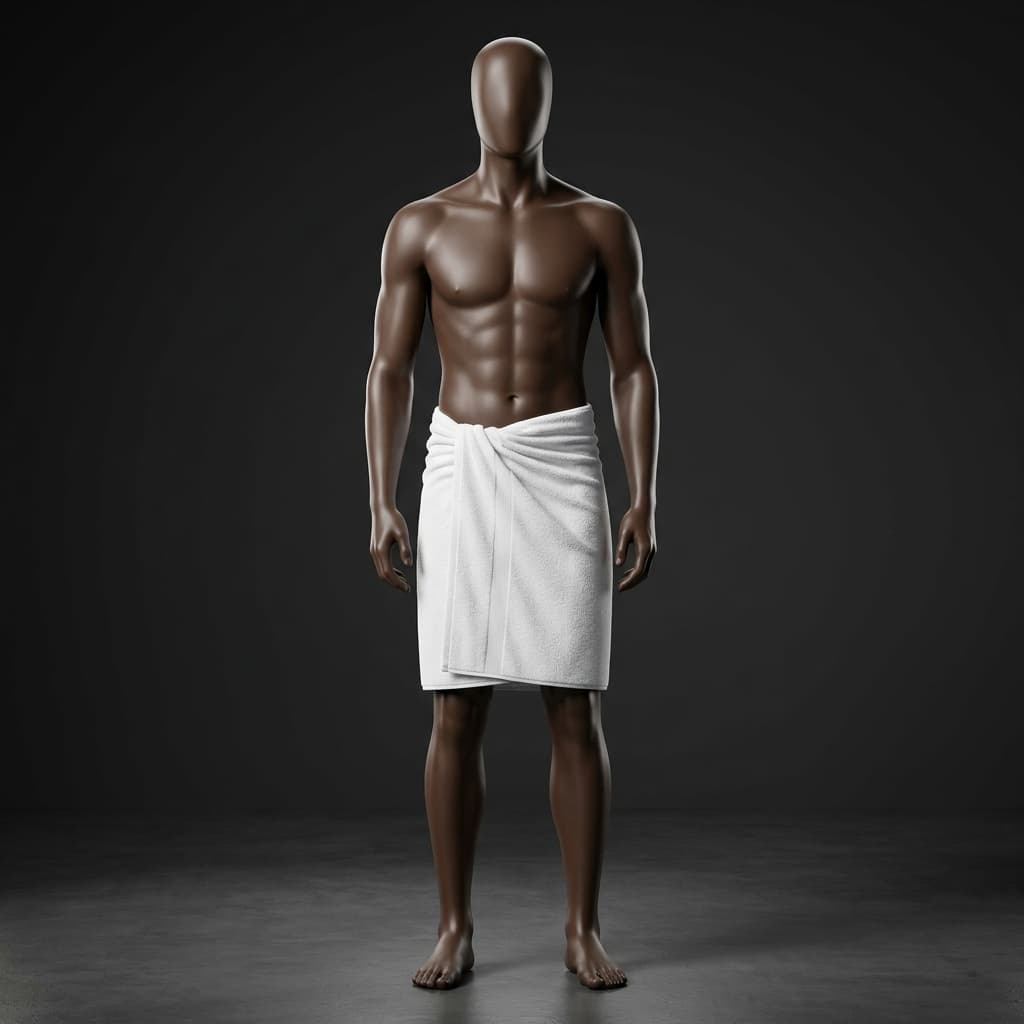
Two unstitched white cloths for men, loose modest clothing for women: Ihram makes every pilgrim equal before God. The app walks you through the full ritual — from the purifying ghusl to the Talbiyah, the invocation repeated without pause as you approach Makkah.
- Talbiyah dua in Arabic, transliteration and translation, with audio
- Custom illustrations of the Izar and Rida (men's garments)
- Dedicated guidance for women's Ihram attire
Tawaf
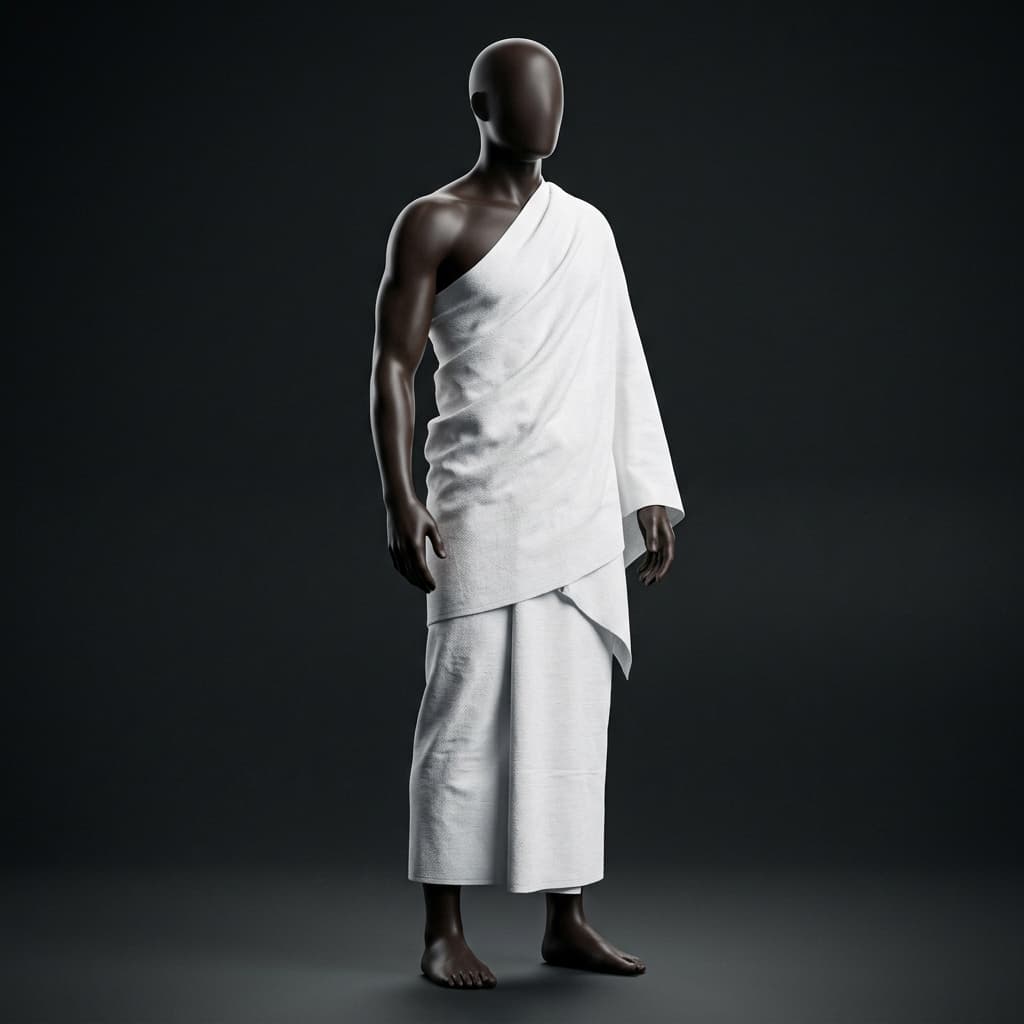
Seven counter-clockwise circuits around the Kaaba. It's the ritual heart of Umrah, and the most detailed stage in the app: a live round counter, a mini-map showing your position relative to the Kaaba at every phase, and hand-drawn illustrations for every gesture — Idtiba, Raml, greeting the Black Stone, the Yemeni Corner, the prayer at Maqam Ibrahim, and closing at Zamzam.
- Live round counter with phase indicator
- Custom 3D-style illustrations: Idtiba, Rida, Raml, Multazam
- Per-phase duas with text-to-speech playback
- Historical notes on every ritual gesture
Historical context
Idtiba — wearing the Rida under the right arm, leaving that shoulder bare — dates back to Umrat al-Qada, when the Prophet ﷺ asked the Muslims to show physical strength to the watching Quraysh on the surrounding hills.
Sa'i
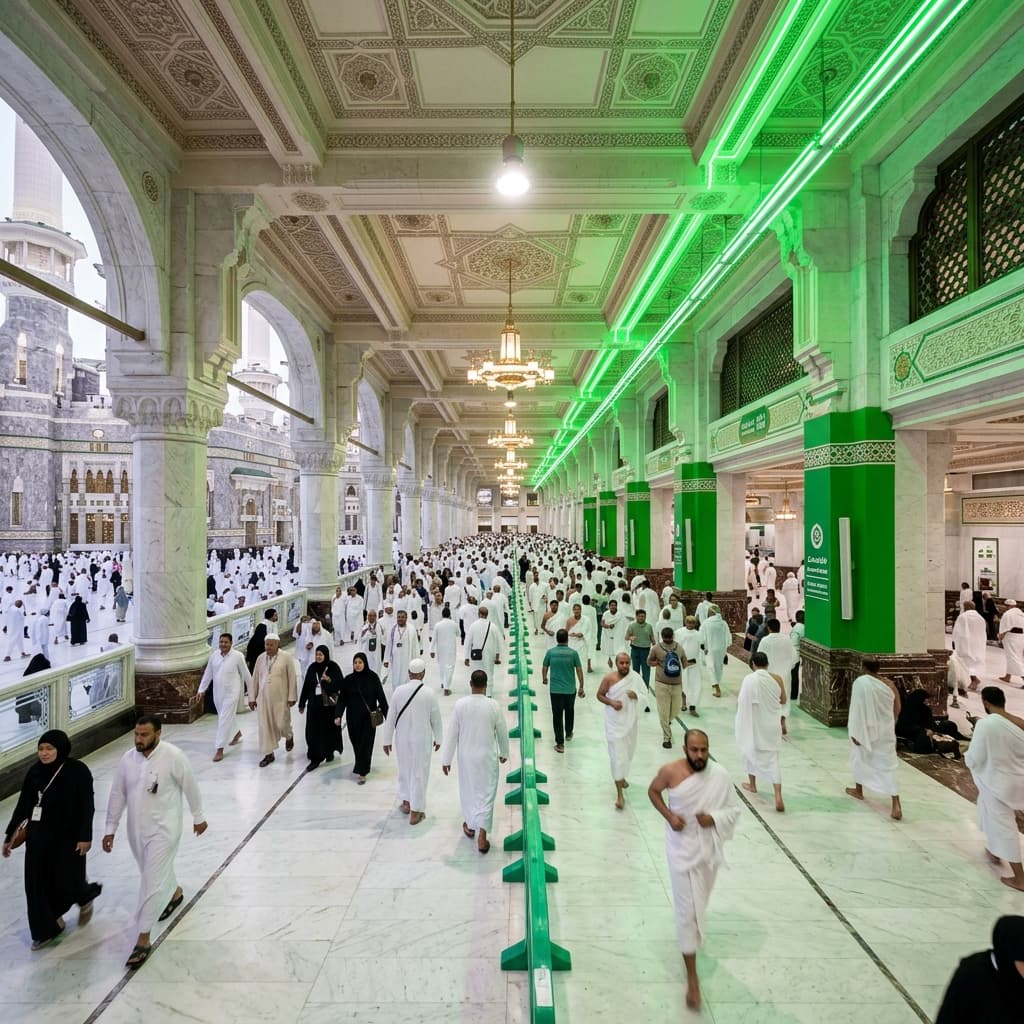
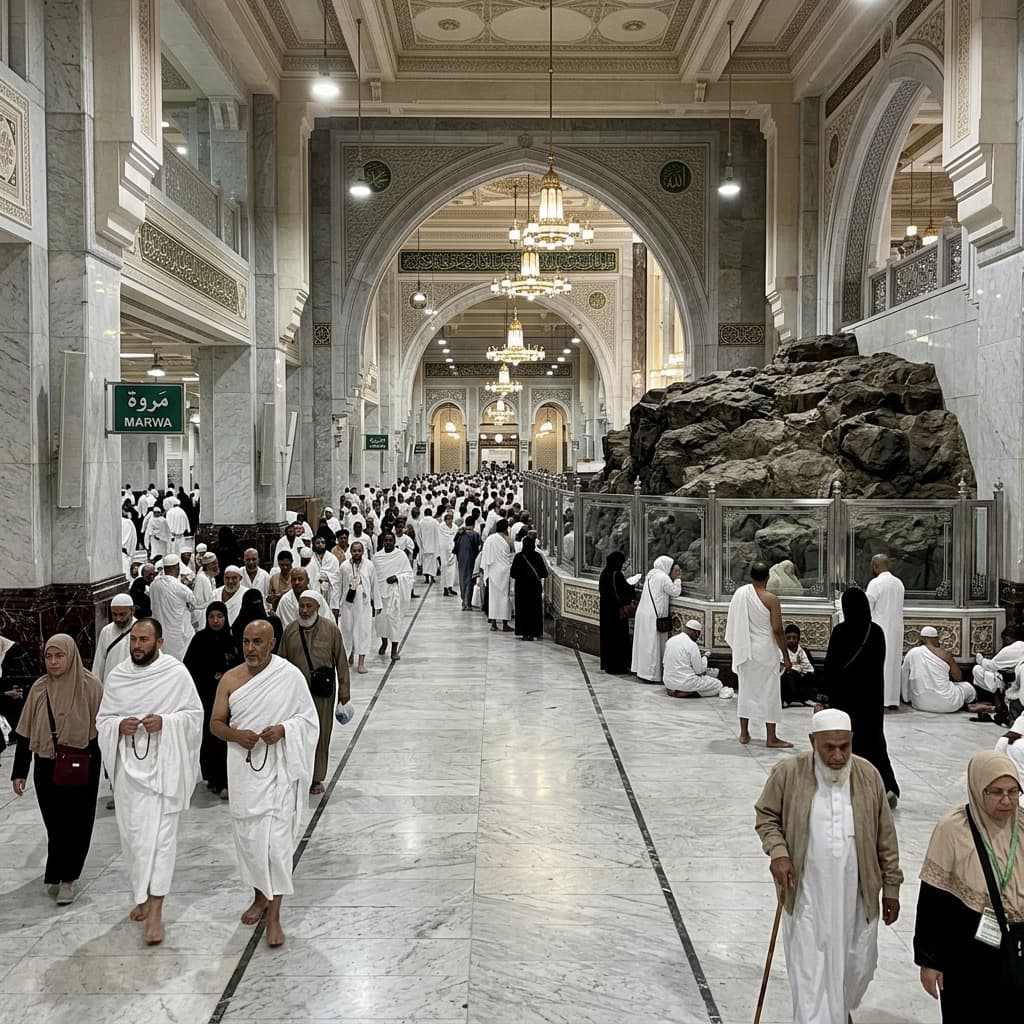
Seven legs between the hills of Safa and Marwa, re-enacting Hajar's (AS) desperate search for water for her son Ismail (AS) — the same search that gave rise to the Zamzam well. Between the corridor's green lights, men quicken their pace (Harwala) in a gesture honoring that moment.
- Safa ↔ Marwa leg counter tracking your position
- "Did you know?" panel with historical context for every leg
- Harwala-zone alert for men
Did you know?
Hajar's (AS) run between Safa and Marwa, searching for water for Ismail (AS), is the symbolic origin of the entire Sa'i ritual — and of the Zamzam spring itself.
Halq / Taqsir
Cutting the hair marks the symbolic end of Umrah. Men choose between Halq (full shave) or Taqsir (trim); women perform only a symbolic Taqsir, cutting a fingertip's length. The app explains both options through a clearly tabbed guide.
- Tabs: what to know, how to choose, what changes after Halq
- Gender-specific rules explained clearly
- Checklist of which Ihram restrictions lift
Tahalul
With the hair-cutting complete, Ihram ends: you can wear normal clothes again, use perfume, and resume everyday life. The app celebrates completion with a "Masha'Allah" screen and a lifetime counter of your completed Umrahs — and suggests the natural next steps of the journey.
- Completion screen with a lifetime Umrah counter
- List of restrictions that lift
- Suggestions: visiting Madinah, Tawaf al-Wada, dua of acceptance
Live every stage with the app in hand
Join the waitlist and be among the first to use the full guide.
No spam — just one email when the app is ready to download.